Australia Opens Third-Party iOS Stores — Concealment Still Kills the Account (Oct 2026)
2026-10-26 · Policy Insights
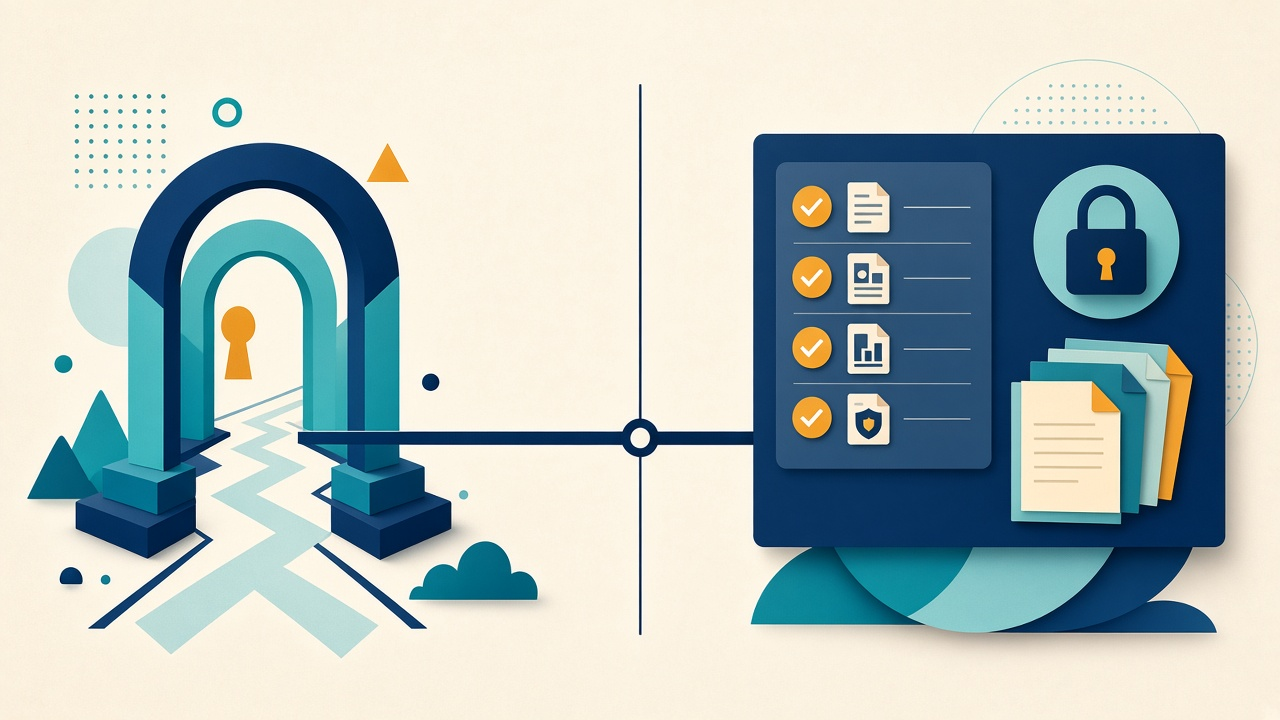
Two headlines landed in the same developer week — and they pull in opposite directions if you only skim the titles.
- Australia’s Federal Court ordered Apple to let Australian-account iPhone users install apps from rival app stores and the open web, with remedies timed for 1 March 2027 (Fortnite returned to the Australian App Store immediately). Apple has said it will seek a stay and appeal.
- On 16 October 2026, Apple’s App Review Guidelines v22 gave Guideline 2.5.19 its own number: no hidden, dormant, or undocumented features — and attempting to hide undocumented capabilities in the binary (including via obfuscation) is grounds for App Store removal and developer-account termination.
More distribution channels do not equal a license to run a “clean” build for Review and a different product for users. The durable play is the same whether you ship on the App Store, a future AU alternative marketplace, or both: a compliance evidence pack on your own App Store Connect / Developer Console — not gray-market 代上架, account sales, or review-evasion framing.
Education only — not legal advice. Court remedies can change on appeal; always re-check the live Guidelines and current court orders before you ship.
The tension in one table
| Signal (Oct 2026) | What it actually means for app teams | What it does not mean |
|---|---|---|
| AU Federal Court remedies (Epic v Apple) — ABC (23 Oct 2026); remedy detail in secondary reporting | AU App Store / Australia-set Apple accounts: rival stores + web distribution ordered from 1 Mar 2027, with automated security/privacy scan + notarisation language in secondary coverage; alternative payments also in scope. Orders are Australia-scoped. | “Ship whatever you want on sideload and App Review no longer matters.” Apple stated it will appeal / seek a stay — timelines may move. |
| ACCC Digital Platform Services Inquiry — March 2025 final report | Continues to flag app-marketplace / mobile OS competition concerns and supports future designation under a proposed digital competition regime; prioritises monitoring. | ACCC did not, in that final report alone, ship a DMA-style “open the store tomorrow” rule. The court order, not the ACCC PDF, is the near-term AU store-opening force. |
| Guideline 2.5.19 (Guidelines last updated 16 Oct 2026) + companion Developer News | Hidden / dormant / undocumented features; bait-and-switch after approval → removal + Developer Program termination. Companion News also notes Section 5 can block alternative distribution for the worst safety violations. | “Third-party stores are a safe harbor for dormant flags / reviewer mode.” |
Apple’s own Guidelines introduction already frames alternative app marketplaces, Web Distribution, and Notarization as real paths in some markets — while still requiring honesty with App Review. AU court remedies add another jurisdiction to that map; they do not rewrite 2.5.19.
What shipped / was ordered (grounded, with uncertainty)
Australia — court remedies (not “ACCC DMA already live”)
- Liability finding: August 2025 — Federal Court found Apple (and Google) misused market power in app distribution / payments (Epic-led litigation; ABC recounts this as the basis for Oct 2026 remedies).
- Remedies published ~22–23 Oct 2026: Justice Jonathan Beach ordered Apple to open devices to rival app stores and web downloads for Australian users / Australia-set accounts, with a 1 March 2027 compliance date for those structural changes; Fortnite returned to the Australian App Store immediately.
- Secondary reporting (TNW / TechRadar-class coverage of the same remedies) adds operational detail worth planning against but not inventing as Apple docs: automated security & privacy scan, notarisation by Apple or a qualified third party, parity of tools/APIs for alternative-route developers, bans on EU-style CTF-like fees for those channels, and limits on retaliatory friction. Treat those as news summaries of the court order until you read the sealed/full orders yourself.
- Appeal risk: Apple publicly disagreed and said it will request a stay and appeal. Do not hard-code “1 Mar 2027 is certain” into product roadmaps without a counsel check.
- ACCC parallel track: The March 2025 DPSI final report keeps pressure on app marketplace competition and designation investigations — useful context, but not the same instrument as the Epic remedies.
Apple — 2.5.19 and alternative distribution language (official)
From the live App Review Guidelines (Last Updated: October 16, 2026):
2.5.19 Don’t include any hidden, dormant, or undocumented features in your app; your app’s functionality should be clear to end users and App Review. Attempting to hide undocumented features in your app binary, such as through code obfuscation or other methods, is grounds for removal of your app from the App Store and termination of your developer account.
Developer News the same day:
- Updated App Review Guidelines are now available — 2.5.19 clarifies long-standing policy formerly under 2.3.1.
- Strengthening App Review Guidelines against … bait-and-switch apps — restates misrepresentation during review then changing after approval; removal from the Store and the Developer Program; Section 5 clarifies certain egregious apps are removed and blocked from alternative distribution.
Also still live: 2.3.1(a) — new features must be specific in Notes for Review and accessible for review; misleading marketing can mean removal, alternative-distribution block, and account termination.
Why “more stores” raises the evidence bar (not lowers it)
- Same Program, more surfaces. Alternative distribution / notarization still sits under Apple’s Developer Program rules for many flows. A 2.5.19-class termination is an account event — it can take App Store and alternative paths with it, depending on the violation (see Section 5 + companion News).
- Reviewer vs user dual builds age badly. “Reviewer mode,” post-approval feature unlocks, and obfuscation-to-hide are exactly what 2.5.19 names. Opening AU sideload / rival stores does not legalize bait-and-switch.
- Gray shortcuts compound risk. Buying / renting someone else’s developer seat, 代上架 that hides the real operator, or shipping a sanitized binary only for Review are compliance failures — not growth hacks. When recovery is needed, Apple and Google expect your console, your legal entity, your evidence.
Console evidence pack — checklist (own account only)
Run this against the exact binary you will submit (App Store and, when AU alternatives go live for your account, any notarized / marketplace build that shares the same capability surface).
A. Binary honesty (2.5.19)
- ☐ No hidden, dormant, or undocumented features in the release candidate.
- ☐ Every user-reachable flow is visible in UI or documented in Notes for Review with demo access.
- ☐ Debug / “reviewer mode” / god menus removed or hard-disabled for store builds — not behind an obscure gesture.
- ☐ Obfuscation (if any) is not used to conceal capabilities from App Review.
- ☐ Marketing, screenshots, and in-app experience tell the same product story.
- ☐ Feature flags that unlock new capabilities after approval are planned as a new submission, not a silent remote enable.
B. Notes for Review + Connect hygiene
- ☐ Notes name specific new features (2.3.1(a) — generic blurbs get rejected).
- ☐ Demo account / demo mode works end-to-end on the submitted build.
- ☐ Backend / entitlements / IAP sandbox paths work during review.
- ☐ Build number in Connect matches the Notes header.
- ☐ Contact email / timezone for App Review is current.
C. Distribution-channel awareness (AU + existing alt markets)
- ☐ Team knows which storefronts / accounts are AU-scoped for future rival-store / web install (Australia-set Apple ID / AU App Store).
- ☐ If you will use notarization / alternative marketplace paths elsewhere (EU, etc.), map which Guidelines subsections apply via Apple’s “Highlight Notarization Review Guidelines Only” toggle — do not assume App Store-only rules.
- ☐ Worst-case safety / fraud violations: plan as if alternative distribution can also be blocked (Section 5 + companion News).
- ☐ Appeal / stay uncertainty logged: product calendar has a contingency if Mar 2027 slips.
D. Refuse list (internal policy)
- ☐ No account purchase / rental for shipping.
- ☐ No 代上架 that conceals the operating entity from Apple.
- ☐ No “clean review binary / dirty production binary” split.
- ☐ No competitor-bashing metadata (see also 2.3.14 creative-asset rules in our pre-submit checklist).
Notes for Review — paste block (AU / multi-channel aware)
Notes for Review — [App Name] [version / build]

1) Demo access
- Apple ID / username: [demo@example.com]
- Password: [••••••••]
- 2FA / OTP: [how to obtain, or “none”]
- Storefront / region if relevant: [e.g. Australia]

2) Primary flows
- On launch: [A] → [B] opens [core feature].
- IAP / subscriptions: demo account above; restore via [path].
- Account-gated content: seed data preloaded on this account.

3) Feature flags / remote config (Guideline 2.5.19)
- This binary does not hide dormant or undocumented features.
- Remote config in this build is limited to: [e.g. copy, crash kill-switch].
- No post-approval flag is planned that unlocks new user-facing capabilities without a new submission.
- Internal / debug menus: [removed | disabled for App Store / notarized release builds].

4) Distribution intent (factual — not a legal claim)
- Primary distribution for this submission: [App Store — list storefronts].
- If / when Australia alternative marketplace or web distribution becomes available for our account under court remedies or Apple programs, we will use the same capability surface disclosed here (no reviewer-only build).
- We are not requesting review of a sanitized “reviewer mode.”

5) Contact
- App Review contact: [name, email, timezone]
15-minute pre-submit run-of-show
- Install the release candidate; walk the Notes steplist yourself.
- Diff flags: anything that can unlock a new capability post-approval → schedule a submission, not an OTA surprise.
- Paste the Notes block; delete unused lines.
- Confirm Connect build number = Notes header.
- Submit. If rejected on 2.5.19 / bait-and-switch: fix the binary, not only the reply text.
Related reading
- Apple 2.5.19 + 2.3.14 Pre-Submit Checklist (Oct 2026) — actionable Connect checklist this piece pairs with.
- Apple App Review Guidelines Oct 16, 2026 — Clause-Level Changes — full v21→v22 inventory.
- Apple Developer News: Updated App Review Guidelines · Bait-and-switch / 2.5.19 companion.
- Live Guidelines: App Review Guidelines (confirm 2.5.19 + alternative-distribution intro on the current page).
- ABC News: Apple forced to change app store rules… (23 Oct 2026).
- ACCC: Digital Platform Services Inquiry — March 2025 final report (monitoring / designation context — not the court order).
Soft next step (optional)
If a concealment / associated-account risk already landed, start recovery on your own Apple Developer account — see account recovery / verification and launch prep. KappS does not sell accounts or gray 代上架 shortcuts; we help with evidence-backed submissions on the client’s own console.
Sources as linked above. Policy education only — not legal advice. Court remedy timelines subject to appeal/stay. Last drafted 2026-10-26 (Asia/Singapore).